Araku Valley coffee: what makes it special?
4 min read
Araku Valley sits in the Eastern Ghats of Andhra Pradesh, inland from Visakhapatnam. Its arabica is grown mostly by tribal smallholder families, often with little or no chemical input, and many farmers sell through cooperatives. The cup is typically soft, sweet and gently fruity, and Araku Valley Arabica received a GI tag in 2019.
Araku is a world away from the big estates of Karnataka. Coffee here grows on small family plots scattered across forested hills, planted among silver oak and other shade trees. Tribal communities make up most of the growers, and farming is largely traditional and low-input.
The hills are high enough for arabica but gentler than the Western Ghats. Araku coffees tend toward a mellow, sweet profile: brown sugar, orange, soft stone fruit and a smooth finish. They are easy to like, which is part of why the name travelled so fast.
- Mostly arabica, grown by smallholders.
- Cooperatives help farmers process and sell better quality lots.
- Often sold as washed or natural, with some newer experimental lots.
Tip: Araku coffees are forgiving. A medium roast makes a lovely everyday AeroPress or French press.
From Araku Valley
See all →
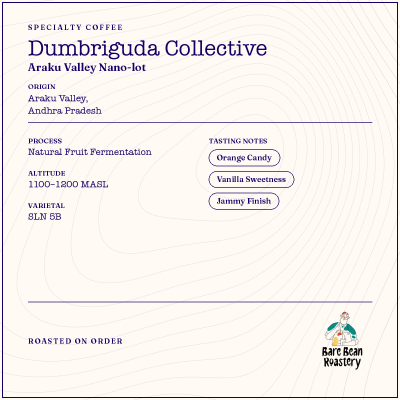
Dumbriguda Collective – Natural Fruit Fermentation Arabica (OR)
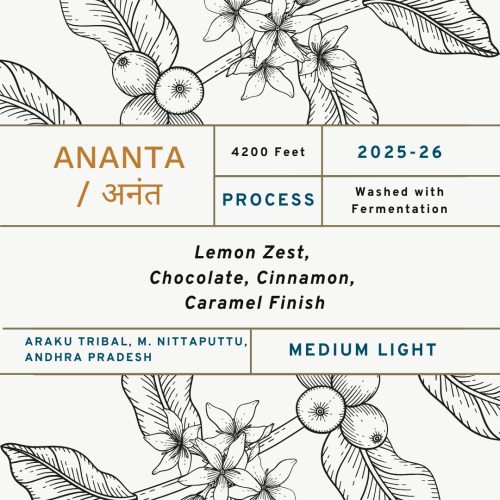

Monsoon Edit
Questions
Is Araku coffee organic?
Much of it is grown with few or no chemical inputs, but only certified lots can be sold as organic. Check the label.
Is Araku close to Koraput?
Yes. They sit on either side of the Andhra Pradesh and Odisha border in the same Eastern Ghats hills.
What does Araku coffee taste like?
Usually soft and sweet, with brown sugar, citrus and gentle fruit.
Read next
Koraput coffee: Odisha's young origin
Arabica from the Eastern Ghats of southern Odisha, grown by tribal farmers and new to specialty shelves.
Coorg vs Chikmagalur vs Araku: which to buy?
India's three best-known coffee names compared: where they are, what they grow and how they taste.
What does direct trade mean in Indian coffee?
When a roaster buys straight from the estate. What it changes for growers, roasters and your cup, and what to ask.
Which Indian coffees have GI tags?
Geographical indications protect the names of seven Indian coffees. What they are and what a GI does and doesn't mean.