How does processing change the flavour of coffee?
6 min read
Processing is how the fruit is removed from the coffee seed after picking. Washed coffees taste clean and bright, naturals taste fruity and heavy, honeys sit in between, and anaerobic or experimental lots push fermentation flavours like wine and tropical fruit. Monsooned coffee is India's own style: mellow, earthy and low in acid.
The seed inside the cherry
A coffee bean is the seed of a red fruit. Around it are skin, sticky sweet mucilage and a papery layer called parchment. Processing decides how much of that fruit stays in contact with the seed while it dries, and for how long. That contact, and the fermentation it brings, shapes a lot of the flavour.
| Method | What happens | Typical cup |
|---|---|---|
| Washed | Skin and mucilage removed, beans fermented in water, then dried | Clean, bright, tea-like, clear origin character |
| Natural | Whole cherry dried in the sun for weeks, then hulled | Fruity, berry, jammy, heavier body |
| Honey | Skin removed, some or all mucilage left on to dry | Sweet, rounded, gentle fruit |
| Anaerobic | Cherries or beans fermented in sealed, low-oxygen tanks | Winey, tropical, boozy, intense |
| Monsooned | Dry-processed beans exposed to monsoon winds for months | Low acid, earthy, spicy, heavy |
What the catalog looks like
| Process | Coffees | Share |
|---|---|---|
| Natural | 258 | 23% |
| Washed | 249 | 23% |
| Honey / pulped natural | 150 | 14% |
| Lactic, yeast & cultured | 128 | 12% |
| Anaerobic | 108 | 10% |
| Co-fermented / infused | 73 | 7% |
| Barrel-aged | 60 | 5% |
| Monsooned Malabar | 52 | 5% |
| Carbonic maceration | 22 | 2% |
| Wet-hulled | 4 | 0% |
| Process | Coffees | Typical (median) | Middle half |
|---|---|---|---|
| Monsooned Malabar | 40 | ₹248 | ₹224–₹300 |
| Washed | 218 | ₹280 | ₹233–₹340 |
| Honey / pulped natural | 123 | ₹290 | ₹240–₹380 |
| Natural | 213 | ₹292 | ₹192–₹398 |
| Lactic, yeast & cultured | 109 | ₹340 | ₹240–₹400 |
| Anaerobic | 95 | ₹360 | ₹300–₹450 |
| Co-fermented / infused | 49 | ₹375 | ₹276–₹422 |
| Carbonic maceration | 14 | ₹376 | ₹310–₹438 |
| Barrel-aged | 44 | ₹440 | ₹340–₹533 |
Price per 100 g of beans or ground coffee, from 1,283 listings in the live catalog.
Picking by taste
- Like clean, crisp coffee and citrus notes: choose washed.
- Like strawberry, blueberry or chocolate fudge: choose natural.
- Want sweetness without funk: choose honey.
- Want something wild that tastes like rum or pineapple: choose anaerobic or experimental.
- Want mellow, strong and old-school: choose Monsooned Malabar.
Tip: Naturals and anaerobics extract easily. If a fruity coffee tastes boozy and harsh, grind a notch coarser or drop your water temperature a few degrees.
Fruity naturals
See all →
Meghalaya Single Origin Robusta Coffee - 250g

Monsoon Edit


Clean washed coffees
See all →Monsoon Edit

Grapes Fermented Green Coffee Beans
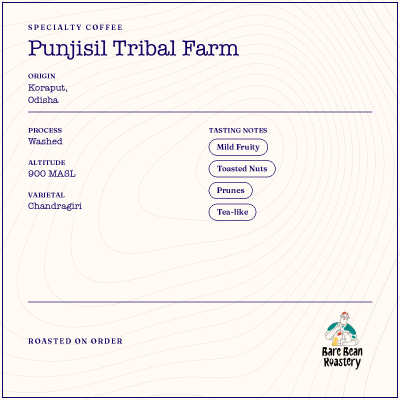
Punjisil Tribal Farm – Washed Arabica

Attikan Estate
Read the short primer on processing →
Questions
Which process is best?
None is best. Each suits a different taste. Washed shows the farm and variety most clearly, natural shows the fruit.
Is natural process lower quality?
Not anymore. Careful sorting and slow drying on raised beds produce some of India's most sought-after lots.
Does processing affect caffeine?
Not in any way you would notice. Species and brew strength matter far more.
Why are experimental lots so expensive?
They take more labour, more equipment and carry more risk of a spoiled batch, and they are made in small quantities.
Read next
What is honey process coffee?
No honey involved. Honey process leaves the sticky fruit on the bean while it dries, for a sweet, rounded cup.
What are anaerobic and experimental coffees?
Sealed tanks, added yeasts, fruit co-ferments and whisky barrels. A plain guide to the wild side of Indian specialty.
What is Monsooned Malabar coffee?
India's most famous coffee style: beans aged in monsoon winds until they swell, pale and lose their acidity.
How does fermentation shape coffee flavour?
Every coffee ferments on the way from cherry to bean. Here is what that means and which flavours it creates.